


In industrial engineering, instrumentation is more than just measurement. It forms the basis of system intelligence, operational safety, and long-term cost control.
In process automation, hydraulic systems, rotating machinery, and plant-wide monitoring networks, two commonly specified instruments are pressure transmitters, used for continuous fluid pressure monitoring, and tachometers, used to measure the rotational speed of machinery.
Although they measure different physical parameters, both play the same critical role in maintaining system stability by providing reliable, real-time feedback to the control system. This article provides a clearer engineering and procurement perspective on how these instruments work, where they are applied, and how they should be evaluated in industrial projects.
The Role of Measurement in Industrial System Architecture
Modern industrial systems are structured around a closed-loop control philosophy, where physical processes are continuously monitored and adjusted through feedback.
A simplified control loop consists of:
- Physical process (pressure, flow, rotation, temperature)
- Sensor layer (transmitters, tachometers, switches)
- Control system (PLC / DCS / SCADA)
- Actuation layer (valves, pumps, motors)
- Feedback correction loop
Without accurate measurement at the sensor layer, the entire automation system becomes reactive instead of predictive.
This is where pressure transmitters and tachometers become critical, they serve as data acquisition points that define how accurately the system can respond to real-world conditions.
Pressure Transmitters as Continuous Process Intelligence Devices
A pressure transmitter is a continuous measurement instrument designed to convert physical pressure into a standardized electrical signal for monitoring and control.
Unlike mechanical switches that respond only when a threshold is reached, transmitters provide a real-time analog representation of system conditions.
Engineering Function in Control Systems
In industrial automation, a pressure transmitter plays a key role as a feedback sensor in a pressure control loop. A pump or compressor first generates system pressure, while the transmitter continuously measures it in real time.
The measured signal is then sent to the PLC or DCS, where the control system processes the data and adjusts outputs such as valve position or pump speed. This allows the system to automatically correct itself and maintain stable pressure.
Through this continuous feedback loop, pressure is dynamically regulated, enabling closed-loop control that is essential for modern automation systems.
Why Continuous Measurement Matters in Industrial Design
From an engineering standpoint, continuous pressure monitoring provides:
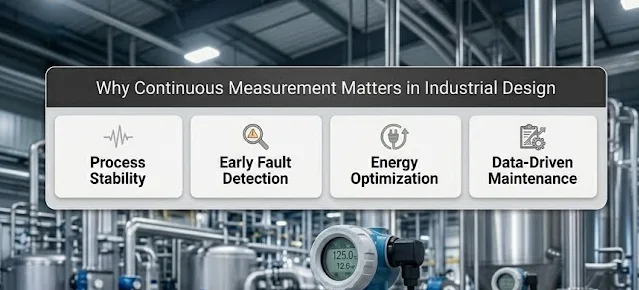
1. Process Stability
Small fluctuations can be detected before reaching critical thresholds.
2. Early Fault Detection
Gradual changes in pressure patterns often indicate issues such as leakage, blockages, pump degradation, or valve malfunction.
3. Energy Optimization
Systems can reduce over-pressurization and unnecessary energy consumption.
4. Data-Driven Maintenance
Trend data enables predictive maintenance instead of reactive repair.
Engineering Selection Criteria
Pressure transmitters should be selected based on both normal operating conditions and pressure spikes, with overpressure resistance being critical in hydraulic systems. Signal compatibility is also important, with 4–20mA widely used for its noise resistance, while digital protocols support more advanced systems.
The materials must match the process media, whether it is oil, gas, steam, or corrosive fluids, to ensure long-term reliability.
In addition, the device must withstand real operating environments, including vibration, temperature changes, and exposure to dust or moisture.
Application Domains
Pressure transmitters are widely used in hydraulic power units, industrial pumping systems, water treatment plants, oil and gas pipelines, and manufacturing process lines. They are essential in any application where pressure stability directly impacts safety and output quality.
Tachometers in Rotational System Monitoring
While pressure transmitters govern fluid systems, tachometers are used to monitor mechanical rotational dynamics, typically expressed in revolutions per minute (RPM).
In industrial machinery, rotation is often the primary driver of energy transfer, making speed control a critical factor in system performance.
Tachometers provide real-time monitoring of rotational speed in motors, pumps, conveyors, turbines, and compressors, ensuring equipment operates within designed limits.
In modern automation systems, tachometers are integrated into PLCs, SCADA dashboards, and predictive maintenance platforms, making them key real-time indicators of machine health rather than simple display instruments.
From a procurement perspective, selection is based on RPM range, signal output type, response accuracy, environmental durability, and system integration compatibility.
System-Level Engineering — Why Pressure and Speed Monitoring Are Used Together
In complex industrial systems, pressure and rotational speed are often closely linked. For example, in a hydraulic pump system, motor speed determines pump flow, which directly affects system pressure. That pressure then influences system load, while feedback control adjusts both motor speed and valve positions to maintain stability.
In this setup, the tachometer ensures stable mechanical input, while the pressure transmitter maintains stable hydraulic output.
| Layer | Instrument | Purpose |
| Mechanical layer | Tachometer | Controls rotational input stability |
| Process layer | Pressure transmitter | Controls fluid output stability |
Engineering Benefit of Combined Instrumentation
Using both instruments improves overall system performance across multiple aspects. It enhances system reliability by enabling early detection of mechanical and process-related issues before they escalate. It also improves process efficiency by allowing real-time feedback that optimizes energy usage and operating conditions.
From a safety perspective, it helps prevent critical conditions such as overpressure and mechanical overspeed. At the same time, it strengthens predictive maintenance capability by supporting condition-based diagnostics instead of relying on fixed maintenance schedules.
Why Barksdale Instruments Are Selected in Industrial Projects
Barksdale instrumentation is widely used in industrial environments because of its strong mechanical durability, stable signal output, and reliable performance under vibration and pressure variations, especially in hydraulic and process applications.
In engineering procurement, reliability is often prioritised over initial cost, as equipment downtime typically results in far higher losses than the cost of the instrumentation itself.
Procurement and Engineering Specification Considerations
For EPC contractors, system integrators, and plant engineers, instrumentation selection is governed by lifecycle considerations rather than single-unit performance.
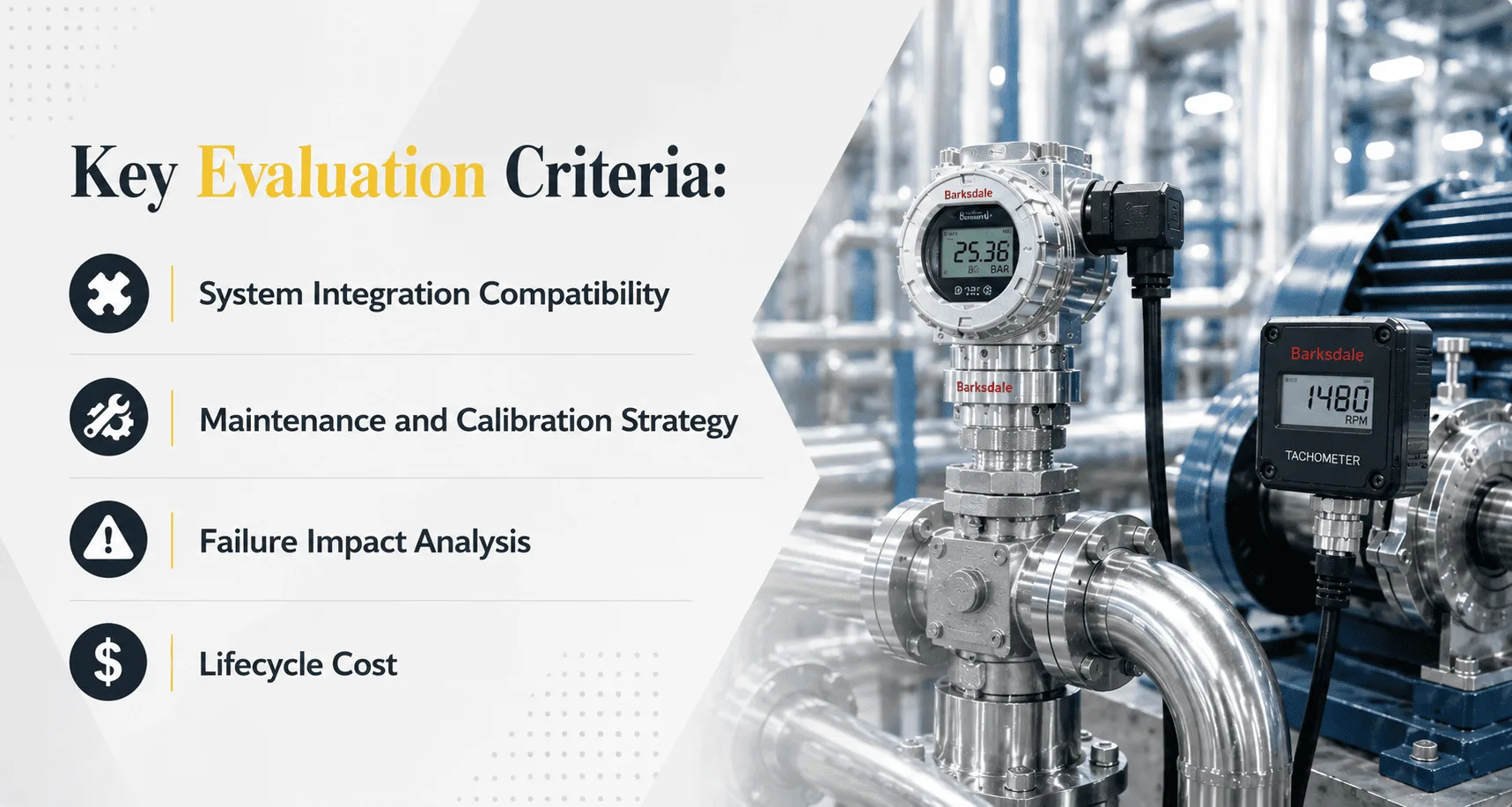
Key Evaluation Criteria:
System Integration Compatibility
- PLC/DCS interface requirements
- Signal standardization across plant systems
Maintenance and Calibration Strategy
- Calibration intervals
- Spare parts availability
- Field service accessibility
Failure Impact Analysis
- Cost of downtime per hour
- Safety implications of sensor failure
- Redundancy requirements
Lifecycle Cost (TCO Approach)
- Installation cost
- Maintenance cost
- Replacement frequency
- System downtime risk
This shifts procurement thinking from unit cost → system reliability cost modeling.
Industrial Applications in Malaysia
In Malaysia’s industrial ecosystem, these instruments are widely used across palm oil processing plants, manufacturing automation systems, oil and gas facilities, water and wastewater treatment plants, and heavy industrial machinery operations.
Their demand continues to grow with the adoption of Industry 4.0 automation, predictive maintenance strategies, energy efficiency initiatives, and stricter safety compliance requirements.
Why Choose Inland for Sampling Panels in Malaysia
Inland delivers sampling panel solutions combining engineering expertise, quality materials, and application-specific design. With strong experience in Malaysian industrial environments, the systems are built for real site conditions and integrate well with broader fluid handling setups.
Customers also benefit from reliable technical support and consultation to ensure proper selection and long-term performance.
Conclusion
Selecting the right pressure transmitter or tachometer is not just a product decision, it is a system-level engineering choice that affects performance, safety, and lifecycle cost.
For project specifications, technical consultation, or product sourcing support, engineers and procurement teams can connect directly with Inland for assistance on Barksdale instrumentation solutions.
About the Author

The Inland Technical Insights Team draws on three decades of experience in servicing the oil, gas, petrochemical, power-plant, and instrumentation sectors in Malaysia and Southeast Asia. Founded in 1995 and licensed by national authorities, Inland provides not only premium stainless-steel tubing and instrumentation components but also engineering support, on-site fabrication, and system design services.
Frequently Asked Questions
What is the difference between a pressure transmitter and a tachometer?
A pressure transmitter measures fluid pressure continuously, while a tachometer measures rotational speed of machinery in RPM.
Why are pressure transmitters used in industrial systems?
They provide continuous real-time data for process control, automation, and predictive maintenance systems.
Where are tachometers commonly used?
They are used in motors, pumps, turbines, compressors, and conveyor systems to monitor rotational speed.
Can both instruments be used in the same system?
Yes, they are often integrated in complex systems to monitor both mechanical and process variables.
Why is continuous measurement important in automation?
It enables closed-loop control, improves efficiency, and supports predictive maintenance strategies.