

Hydraulic systems operate under high pressure and demanding conditions where every component plays a vital role in maintaining reliability and safety. While pumps, valves, hoses, and fittings often receive the most attention, pipe clamps are frequently overlooked despite their significant impact on system performance.
Choosing low quality pipe clamps may appear to reduce initial costs, but the long-term consequences can be far more expensive. Poor pipe support can lead to excessive vibration, accelerated wear, hydraulic leaks, equipment downtime, and higher maintenance costs. For industries such as manufacturing, construction, mining, marine, and oil and gas, these issues can quickly affect productivity and operational efficiency.
This article explores the hidden costs of using low quality pipe clamps and explains why investing in reliable solutions is essential for protecting hydraulic systems.
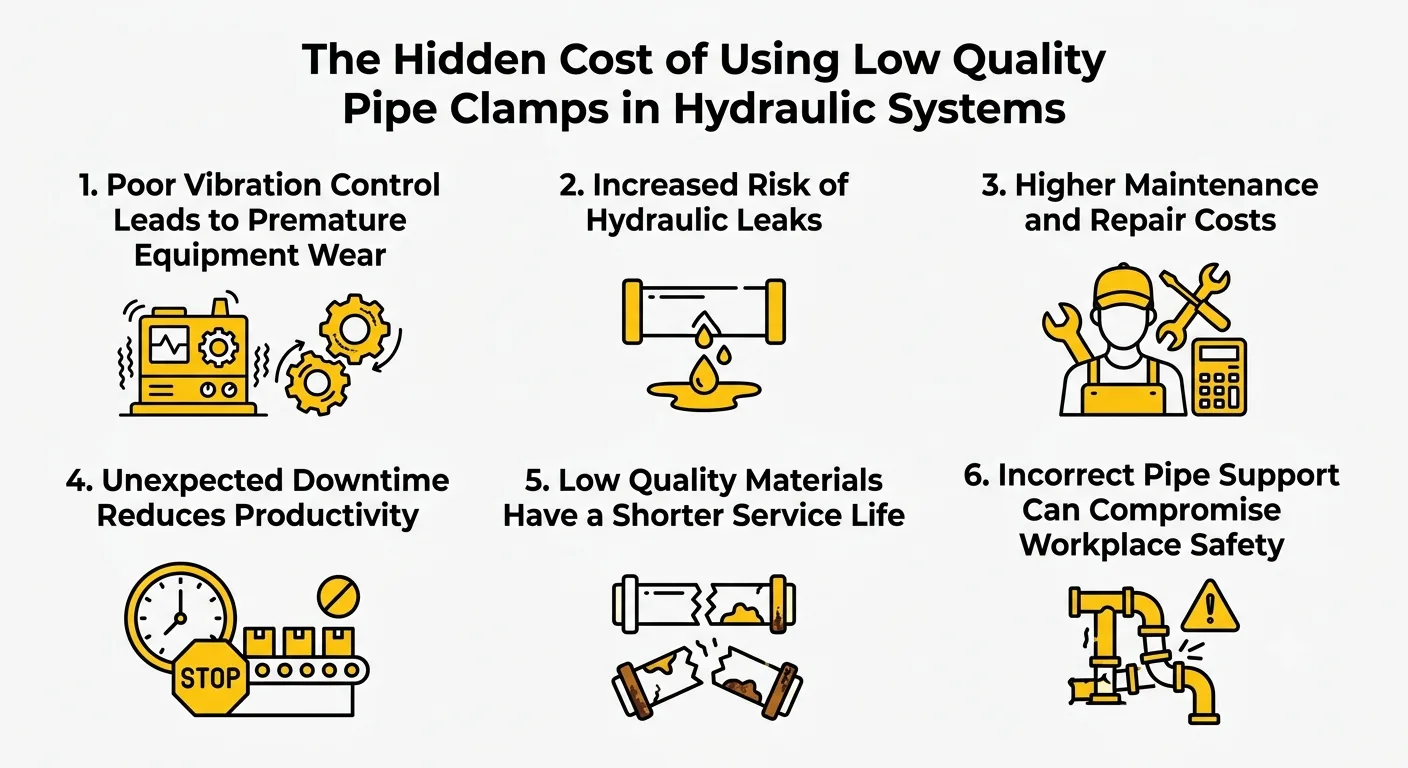
1. Poor Vibration Control Leads to Premature Equipment Wear
Hydraulic systems naturally generate vibration due to fluid movement, pressure fluctuations, and machine operation. Without proper pipe support, these vibrations travel through pipes and tubing, placing continuous stress on the entire hydraulic circuit.
Low quality pipe clamps often lack sufficient rigidity, accurate dimensions, or durable materials to effectively absorb vibration. As a result, pipes can move excessively during operation.
Over time, this movement may cause:
- Fatigue cracks in hydraulic tubing
- Loose fittings and connectors
- Damage to valves and hydraulic components
- Increased noise during machine operation
A properly engineered pipe clamp secures tubing firmly while reducing vibration transmission, helping to extend the service life of the entire hydraulic system.
2. Increased Risk of Hydraulic Leaks
Hydraulic leaks are among the most common causes of equipment downtime. Even small movements in unsupported tubing can place constant stress on threaded fittings, welded joints, and hose connections.
When pipe clamps fail to hold tubing securely, repeated movement gradually weakens these connection points until leaks develop.
Hydraulic leaks can result in:
- Loss of hydraulic pressure
- Reduced machine efficiency
- Contamination of work areas
- Environmental compliance issues
- Increased hydraulic oil consumption
Replacing leaked hydraulic fluid and repairing damaged connections often costs significantly more than investing in quality pipe support from the beginning.
3. Higher Maintenance and Repair Costs
Many maintenance issues originate from poor pipe installation rather than failed hydraulic components.
Low quality clamps may crack, deform, or loosen after prolonged exposure to:
- Continuous vibration
- Heavy mechanical loads
- Extreme temperatures
- Chemicals and industrial fluids
- Outdoor environments
As clamps deteriorate, technicians spend more time performing inspections, tightening supports, replacing damaged clamps, and repairing related hydraulic components.
These recurring maintenance activities increase labour costs while reducing equipment availability.
A durable pipe clamping solution helps minimise maintenance intervals and lowers the total cost of ownership throughout the equipment’s operating life.
4. Unexpected Downtime Reduces Productivity
For industrial operations, equipment downtime often represents the largest hidden cost.
When hydraulic systems fail unexpectedly due to damaged pipes or leaking connections, production may stop until repairs are completed.
Downtime can affect:
- Manufacturing output
- Delivery schedules
- Project completion timelines
- Labour utilisation
- Customer satisfaction
In many industries, a single hour of production downtime can cost far more than the price difference between standard and premium pipe clamps.
Using high-quality pipe clamps helps reduce the likelihood of unexpected failures and supports more reliable equipment operation.
5. Low Quality Materials Have a Shorter Service Life
Not all pipe clamps are manufactured to the same standard.
Lower-cost products may use inferior plastics or low-grade steel that cannot withstand demanding industrial environments.
Common problems include:
- UV degradation
- Corrosion
- Plastic cracking
- Reduced load capacity
- Deformation under pressure
Quality pipe clamps are manufactured using durable materials designed for specific operating conditions, including polypropylene, polyamide, aluminium, stainless steel, and steel components with corrosion-resistant coatings.
Selecting the appropriate material significantly improves reliability and extends service life.
6. Incorrect Pipe Support Can Compromise Workplace Safety
Safety should always be a priority in hydraulic installations.
Loose hydraulic tubing may shift during operation, increasing the risk of:
- High-pressure hydraulic leaks
- Flying debris from failed fittings
- Damage to nearby equipment
- Oil spills creating slip hazards
- Unexpected machine shutdowns
Properly installed pipe clamps help maintain correct pipe alignment while reducing unnecessary movement.
In safety-critical industries such as offshore, marine, heavy equipment, mining, and manufacturing, reliable pipe support is an important part of maintaining a safe working environment.
Conclusion
Pipe clamps may appear to be small components, but they play a critical role in maintaining the reliability, safety, and efficiency of hydraulic systems. Choosing low quality pipe clamps can lead to excessive vibration, hydraulic leaks, increased maintenance, costly downtime, and shorter equipment lifespan. These hidden costs often outweigh any initial savings made during procurement.
For businesses seeking dependable hydraulic pipe support, investing in high-quality Stauff Pipe Clamps provides a reliable solution designed to minimise vibration, improve system stability, and support long-term performance across a wide range of industrial applications.
At Inland, we supply genuine STAUFF hydraulic components and pipe clamping solutions that meet demanding industrial requirements. Whether you are upgrading an existing hydraulic system or planning a new installation, our team can help you select the right pipe clamp solution for your application. Contact Inland today to discuss your hydraulic system requirements and find the most suitable solution for your operation.
About the Author

The Inland Technical Insights Team draws on three decades of experience in servicing the oil, gas, petrochemical, power-plant, and instrumentation sectors in Malaysia and Southeast Asia. Founded in 1995 and licensed by national authorities, Inland provides not only premium stainless-steel tubing and instrumentation components but also engineering support, on-site fabrication, and system design services.
Frequently Asked Questions
Why are pipe clamps important in hydraulic systems?
Pipe clamps provide secure support for hydraulic pipes and tubes, helping to reduce vibration, noise, and movement during operation. Proper pipe support prevents stress on fittings and components, improving system reliability and extending equipment lifespan.
What problems can low quality pipe clamps cause?
Low quality pipe clamps can lead to excessive vibration, pipe movement, hydraulic leaks, premature component wear, and unexpected system failures. Over time, these issues can increase maintenance costs and cause costly equipment downtime.
How do Stauff Pipe Clamps improve hydraulic system performance?
Stauff Pipe Clamps are designed to provide reliable pipe support, vibration reduction, and secure mounting for hydraulic systems. Their durable construction and precise design help protect pipes, fittings, and other hydraulic components from unnecessary stress.
What materials are commonly used for hydraulic pipe clamps?
Hydraulic pipe clamps are commonly available in materials such as polypropylene, polyamide, aluminium, steel, and stainless steel. The right material depends on factors such as operating temperature, environmental conditions, corrosion exposure, and application requirements.
How do I choose the right pipe clamp for my hydraulic system?
The correct pipe clamp selection depends on pipe size, operating pressure, vibration level, installation environment, and material requirements. Considering these factors helps ensure proper support and long-term system performance.